People ask about the slate. Where it comes from, what color, how thick. Fair questions. But the slate is rarely what makes or breaks the roof.
It's the flashing.
Every valley, every chimney, every wall where the roof meets something vertical — that's where water wants in. The slate can last a century. The flashing decides whether it gets the chance.
Before: reading the old roof
We start by reading what's there. Not just the failed areas — the whole roof. How was it flashed originally? Where did the last roofer cut corners? On a landmark building, the original craftsmen usually got it right. Our job is to match their intent with better materials.
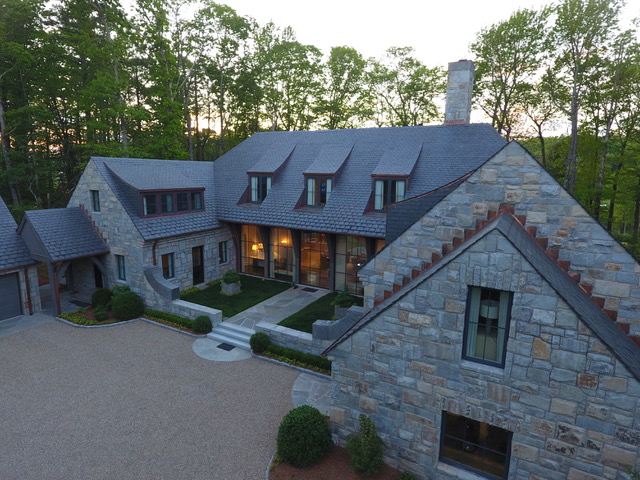
On this Vermont slate job, the original valleys were soldered copper. Still sound after decades. The step flashing at the dormers wasn't. That's the pattern: the big moves hold, the small details fail.
During: the decisions nobody sees
Here's what the homeowner never sees but pays for either way:
Copper weight. We use 16-ounce copper minimum for valleys and flashing. Some roofers use 12-ounce to save money. It works — for a while. Then it doesn't.
Solder, not sealant. Every copper joint gets soldered. Sealant is a shortcut. It fails in ten years. Solder lasts as long as the copper.
Slate headlap. Three inches minimum. In wind-driven rain country, more. This isn't a suggestion. It's the difference between a roof and a rumor of a roof.
After: what a century looks like
When we finish, the roof looks like it belongs on the building. Not new — right. The courses run true. The hips are tight. The copper will patina to brown, then to green, over the next twenty years.
The homeowner gets a roof they'll never think about again. That's the goal. A roof you never think about is a roof that was done right.
— Gary Shank